


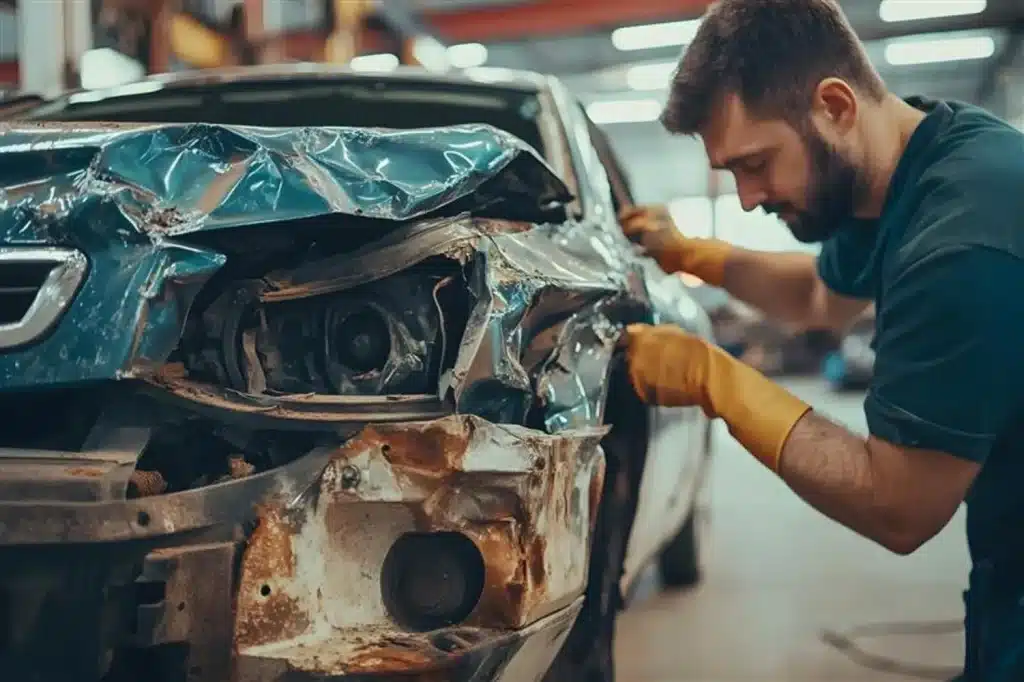
you’ve just been in a minor fender-bender in Bayswater and the panel shop fixes the dent. You smile, thinking your car is good as new until you step out the next morning and notice the freshly painted panel is just a shade off.
Even a tiny colour mismatch can shout “repair alert” under the Aussie sun. It’s a nightmare for anyone who’s ever booked a smash repair. In smash repairs, the right paint match can make or break the result. For anyone who’s ever done smash repairs, this scenario is all too familiar.
That’s why perfect paint matching is a big deal in smash repairs. In this article, I’ll walk you through how pro paint shops tackle this challenge so your car looks seamless after smash repairs. A proper smash repairs job leaves no tell-tale clues including colour differences.
Why Colour Matching Matters in Smash Repairs
When your car gets hit, the fix isn’t just about pounding out dents or replacing panels, it’s about making that spot blend perfectly with the rest of the car’s finish. Car manufacturers use thousands of paint formulas, and each batch can differ slightly.
Factors like model year, factory line, paint batch, and climate conditions all affect the exact shade. In short, two cars with “the same” colour on paper may not look identical. Add years of Aussie sun, road salt, and everyday wear, and subtle changes sneak in:
- Every car ages differently. A Bayswater sedan parked near the beach all summer will fade faster than one garaged inland. Smash repair techs always check how much the paint has aged before mixing a new batch.
- Colour quirks matter. Modern paints often include metallic flakes or pearlescent swirls. If the mix’s flake size or orientation is off, the shimmer won’t line up with the rest of the car.
- Blending is key. Professionals know to blend the new coat into neighbouring panels so you never see a line. They spray the adjacent area lightly, fanning the colour outwards, to fool the eye. This ensures “no panel looks brighter or duller” than another.
In short, spot-on colour matching keeps your car looking factory-new after smash repairs and protects its value. Let’s see how the pros actually nail that match.
Decoding Your Car’s Colour Code
Every car has a secret colour code usually on a sticker in the door jamb, under the bonnet or in the boot. This code tells a computer what the original mix of pigments was. But here’s the key: that code is only a starting point.
Think of it like a recipe for a dish you cooked years ago; ingredients may have been tweaked since. The sticker’s code won’t reflect how much the sun or age has changed your car’s actual hue. In a good smash repairs workshop, finding that code is always step one before reaching for any tools or paint.
Tech Tools: The Spectrophotometer and Beyond
Enter the high-tech heroes: spectrophotometers and paint-mixing software. In a modern smash repair workshop, a spectrophotometer is like a super-smart colour camera. The technician places it on your panel and it measures how light reflects off the paint reading hue, brightness, saturation, and even metallic or pearl content. They might take readings in the shade and in bright light for accuracy.
The data from the scan gets fed into a computer that has a giant library of factory formulas (often over 100,000 different paints). It spits out a custom blend that should match your car’s paint as it is today. But technology isn’t the whole story.
Skilled technicians still hold a physical colour chip against your car to fine-tune the mix by eye. As one industry expert says, “a trained expert eye is still invaluable, especially for complex finishes”. In practice, it’s a mix of high-tech and human skill.
This step alone scanning and formula generation ensures the new paint starts on the right page. But before any paint touches your car, a quick sample spray is done to double-check.
Step-by-Step: The Professional Smash Repairs Paint-Matching Process
Modern smash repair shops follow a careful process to make the fix invisible. Here’s a simplified run-down of the professional smash repairs paint-matching recipe:
- Surface Prep: Clean and sand the damaged area. Removing dirt, wax or old clear coat is crucial because any contaminant can throw off the colour reading. It is like diluting a canvas with a cloth.
- Colour Analysis: The tech runs the panel through the spectrophotometer in various locations. This records the real current colour (including fading) of the car, as opposed to the factory specification only.
- Generation of Formulas: The scan is compared with manufacturer databases. The computer proposes a formula of the paint – a specific combination of colors and basecoat – which is expected to present the required colour.
- Formula Generation: The scan is matched against manufacturer databases. The computer suggests a paint formula, a precise mix of pigments and basecoat – that should achieve the desired hue.
- Test Spray: Before touching your car, painters spray the mix onto a test card or piece of metal. They examine this sample under workshop lights and daylight. Only once the test swatch looks perfect (colour, gloss, metallic effect) do they proceed. In fact, many smash repair shops even let customers inspect the sprayed test panel in bright light to make sure the match is perfect.
- Final Application: The matched paint is sprayed onto the repair area in thin, even coats. Critically, painters also feather the new colour into the surrounding panels. This blending step ensures no hard lines between old and new paint.
- Clear Coat & Cure: A top-quality clear coat is applied for gloss and UV protection. The car goes into a bake booth or controlled environment to harden the finish. This makes the repair durable and gives it a factory-level shine.
- Buff & Inspect: Finally, the panel is gently polished to eliminate any tiny texture differences. The tech checks the repair under different lighting angles. By this point, the repair should be truly invisible; the panel shines just like the original and you won’t even notice the fix.
Common Colour Matching Challenges in Smash Repairs
Even with all this tech, some paint jobs keep repairers on their toes:
- Ageing and Fading: Paint that’s 10 years old may be duller and warmer than new paint. Techs compensate by tweaking the mix – adding tint to simulate the faded finish.
- Metallic & Pearl Finishes: These contain tiny reflective flakes. The angle, size and distribution of flakes must match the rest of the car. Otherwise, the patch might glitter differently. Pros often match these under showroom lighting to double-check.
- Tri-Coat Paints: Modern premium paints have three layers (base colour, effect coat, clear coat). Perfecting a tri-coat repair means dialing in each layer just right. It’s like building a three-layer cake where each layer tastes right on its own and together.
Your Rights When Getting Smash Repairs Done
Under Australian Consumer Law, administered by the Australian Competition and Consumer Commission (ACCC), vehicle repair services must be carried out with due care and skill and must be fit for purpose. This means smash repairs — including paint matching and finishing — must meet professional quality standards. If a repaired panel has obvious colour mismatch, poor blending, or substandard finish, customers may be entitled to have the issue corrected at no extra cost. The law protects vehicle owners by ensuring repairers deliver work that matches what was promised.
Professional vs DIY Paint Matching
Here’s how professional smash repairs compare to DIY fixes:
| Repair Type | Colour Match Accuracy | Finish Quality | Long-Term Durability | Customer Satisfaction |
| DIY Touch-Up Kit | Low | Uneven | Poor | ~25% |
| Basic Budget Body Shop | Moderate | Acceptable | Fair | ~60% |
| Professional Smash Repairs | Very High | Factory-Level | Excellent | 95%+ |
DIY kits often look acceptable at first glance but fail under bright sunlight. Professional repairs use technology, blending, and controlled curing environments that simply can’t be replicated at home.
Insurance companies also favour high-quality repairs. A poor paint job can reduce vehicle value and complicate claims.
Conclusion
The art of matching in a smash repair with perfect paint cannot be guesswork, it is a combination of hi-tech technology, exact formulae, professional technicians, and delicate blending methods. Decoding your paint code on your car all the way to the spectrophotometers and layered finishes counts.
The slightest incongruity can be noticed in the bright Australian conditions. This is the reason why professional smash repairers spend on advanced equipment as well as experience to have your vehicle look factory-fresh once more.
The real quality smash repair does not fix the damage it instills confidence.
Call to Action
When your car is in need of a smash repair in Bayswater, it is not acceptable to get one which is close enough.
You must enquire about your repairer regarding their paint-matching ability, blending procedure and quality control measures. A qualified workshop will be more than happy to tell their methods of achieving a smooth outcome.
Contact us today to book an inspection or request a free quote, and let our expert team restore your vehicle to perfection.
FAQS:
Q: What happens if the paint doesn’t match after a smash repair?
A: Unfortunately, even a slight colour mismatch stands out and looks unprofessional. It’s like having a new shirt that’s the wrong shade – it ruins the look. A bad match in smash repairs can lower your car’s value and negate the quality of the repair.
Q: Why is perfect paint matching important in smash repairs?
A: Due to the fact that a slight difference in colour results in the repair being conspicuous. A perfect fit will make your car look factory-fresh, and ensure its resale price. It also simplifies insurance inspection as the adjusters will view the repair as having been done well.
Q: How do smash repairers actually match car paint?
A: They start with your car’s paint code, but more importantly use a spectrophotometer on the existing paint. That gives a precise formula. After fine-tuning and a test spray, the matched paint is applied and blended into the repair area. The process we described is standard in pro smash repairs.
Q: Can faded or old paint be matched to new paint?
A: Yes. Techs adjust for fading by tweaking the mix and accounting for age. The goal is for the new section to look like it’s had the same wear as the rest of the car, not like a brand-new panel. Skilled smash repairs shops know how to replicate that sun-faded look.
Q: How do I care for the repaired area after paint matching?
A: Treat it like any other paint. Avoid harsh cleaners for the first few weeks and wax it to add protection. Give the paint a little time to harden in sun and wind. Park in shade when possible so the clear coat can fully cure. These steps help your newly matched paint keep looking fresh.